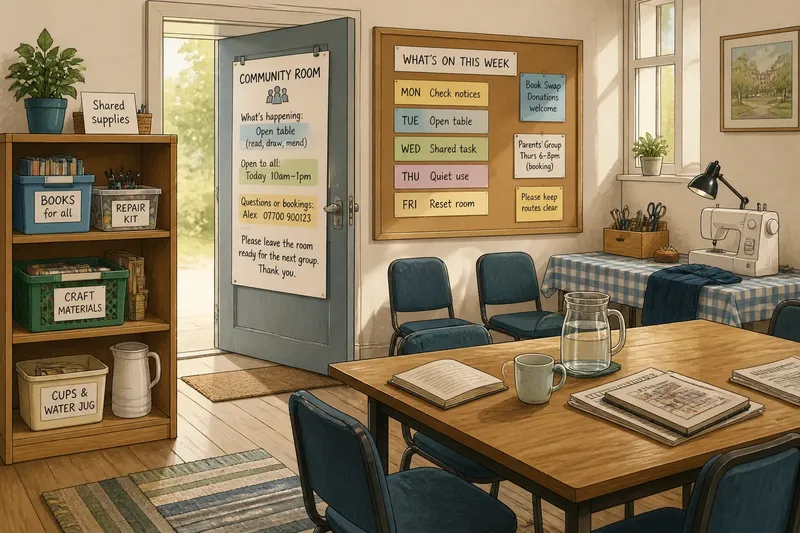
A Small Gathering, Marked by a Shared Opening
Plan a nonpartisan neighbourhood gathering with a brief welcome and shared opening that marks the occasion while giving guests several ways to take part.
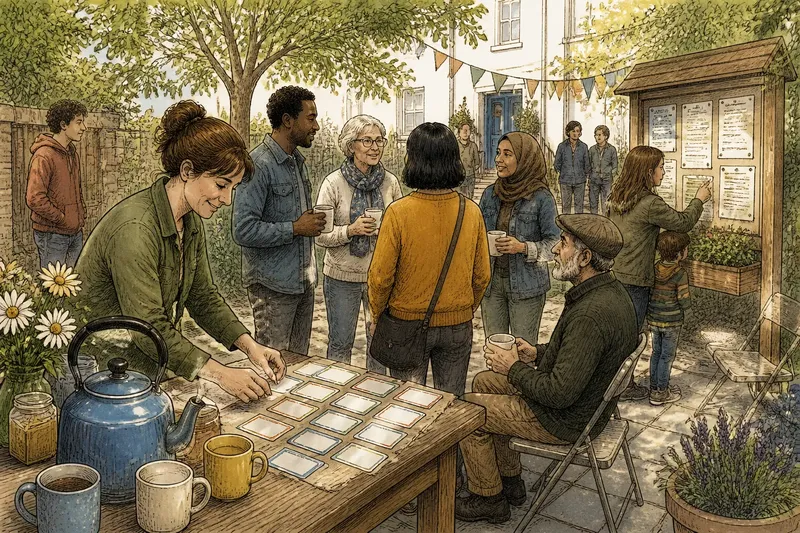
The kettle clicks off as a neighbour lays out name labels beside the cups. At a small neighbourhood gathering, that ordinary pause can mark a shared opening without requiring a speech, a pledge or a round of introductions. The useful question is how to give people a common starting point while leaving them room to arrive in their own way.
A welcome can name the purpose, recognise relevant contributions and explain what happens next. The opening might be a few words, a practical action or a quiet pause. Choose a form that belongs to the occasion, not one borrowed from a more formal event.
Purpose before ritual
State the purpose in one ordinary sentence. People may have come to meet new neighbours, mark the reopening of a garden or discuss a local concern. The reason should be clear without turning the welcome into an argument for a political position.
Nonpartisan does not mean empty of public life. A gathering can concern a crossing, library or park while leaving room for different views about what should happen next. If the event includes a decision or request for support, say so plainly. A convivial opening should not disguise a campaign or consultation.
Ask what the opening needs to do. It may help strangers settle, mark a change, thank contributors or explain the event. If it does none of those things, “Thank you for coming” may be enough. Ceremony can expand to fill whatever space it is given.
Choose the opening
Different formats give people different ways to join in. The aim is not to make everyone behave identically, but to make the purpose and next move understandable.
- For neighbours who have not met: Offer name labels and a choice of seats, then let conversation begin informally. If guests seem unsure where to start, a host can introduce two willing people; if they prefer to listen, leave them space rather than starting a compulsory roll-call.
- For a practical event: Name the task and the people who helped prepare it, then point out the tools, refreshments or activity area. If guests can begin without further explanation, let them get on with it; if the task is unclear, demonstrate the first action before inviting anyone to join.
- For a milestone or reopening: Let someone with a connection to the occasion say a few words, then offer a shared action such as placing a sign. If people can participate comfortably, invite them to help; if not, they can watch without being singled out.
- For a gathering after loss or disruption: Keep the welcome gentle and do not assume people want to speak about what happened. If a quiet pause suits the group, explain it and leave participation open; if practical help is the immediate need, point to the person or place where it is available.
- For a mixed-age or mixed-language group: Use plain sentences, visible cues and time for interpretation. If everyone can follow the spoken welcome, proceed; if some cannot, pause for interpretation or use a written notice rather than relying on a clever phrase.
These are not grades of formality. They are different ways to make the first minutes legible. Think of the opening as a doorstop: it holds the door open, but does not decide who must walk through it.
Participation by choice
Offer more than one comfortable way to be present. Someone might speak, listen, help with a practical task, sit quietly or arrive later and read a notice. These options are not a special concession. They let the gathering work for people with different reasons for coming.
Singing, prayer, pledges, personal introductions and public statements of support may feel natural to some people and uncomfortable to others. Unless a practice is central to the event and stated beforehand, choose an opening that does not depend on everyone performing it. Avoid scanning the room to see who complied; a welcome should not double as an attendance check.
Make the physical arrangements fit the chosen opening. If people need to hear a speaker, use a microphone where appropriate and check that the seating gives them a clear view. If the activity involves moving around, keep routes open and make watching a valid option. Common attention does not require identical posture.
Write a brief welcome
A welcome can greet people, name the occasion, acknowledge relevant contributions and explain what follows. It can be warm without pretending the gathering is a family. Some neighbours will be meeting for the first time; others may simply have come because the notice gave a clear reason.
Say names only when they are known and relevant. Thank people for specific work, such as arranging interpretation, setting out chairs or opening the garden gate. Ask how someone wishes to be named if there is any uncertainty.
Say you are hosting a welcome for people who have moved into a block, with tea by the entrance and a small noticeboard where guests can leave local tips. You plan to say: “Welcome. We’re here to meet neighbours and share useful information about the building. You can have a chat, leave a note, or simply listen; after a short pause, I’ll point out the noticeboard.” The steps are straightforward: state the purpose, name the options, allow the pause, then show where to go. The observable result is that guests know what the gathering is for and can choose a way to participate without having to speak to the whole room.
Read the welcome aloud before the event. Remove sentences that repeat the notice, praise the organisers at length or ask people to agree with a vague claim about unity. If the welcome needs a page of notes, some of its material may belong in the main event.
Set the room
The arrangement suggests what people may be expected to do. Rows facing one chair suggest an audience; a circle can suggest that everyone will be asked to speak. Neither is automatically better. A loose arc or small clusters can give a host a clear place to speak without putting every guest on display.
Keep the welcome near an obvious point of attention without blocking the entrance. Put refreshments and information where people can find them. A handwritten sign or printed sheet can answer practical questions without repeated announcements.
Use a cue people can understand without special equipment. A host might say, “Let’s take a moment before we begin,” then leave a short silence. If a bell, music or procession would suit the occasion, use it; if it would draw attention to itself, a plain spoken cue is enough.
Which format fits?
Should everyone introduce themselves?
Use a round of introductions when the group is small and there is a clear reason for people to know one another. For a larger group, offer conversation in pairs or make introductions optional so nobody has to give a public account of themselves.
Is a moment of silence suitable?
It can suit a reflective occasion if the host explains why it is being offered and does not prescribe what people should think. For a practical event, a clear welcome followed by the first activity may feel more natural.
Who should give the welcome?
Choose someone connected to the gathering who can speak plainly, such as a resident host or activity organiser. If the event is nonpartisan, avoid giving a candidate or political representative the opening in a way that turns it into a platform.
What if people arrive late?
Keep a visible notice or schedule available and ask a host to greet late arrivals quietly. Restart the shared opening only if the group is small and a restart would prevent confusion.
Keep claims proportionate
The main risk is not insufficient grandeur. It is claiming more than the gathering can honestly offer. A roomful of neighbours need not be called a close-knit community, and sharing a concern does not mean agreeing on what should happen. “We have come together around this place” leaves room for difference while naming what is true.
If the gathering concerns a public issue, distinguish the welcome from any later discussion or decision. Explain who is hosting, what the event is for and whether people are being asked to share ideas, make a choice or simply meet. A symbolic shared act should not be used to imply consent to a proposal. Nobody should discover halfway through the tea that they have joined a campaign.
For a small neighbourhood gathering, a shared opening works best when people understand the purpose and can choose how to be present. Give them a clear next cue, and let the event proceed without treating attendance as evidence of agreement.