The Many Lives of a Shared Room
A shared community room can work beyond formal meetings. A clear routine helps neighbours know when it is open, what they can use and how to leave it ready.
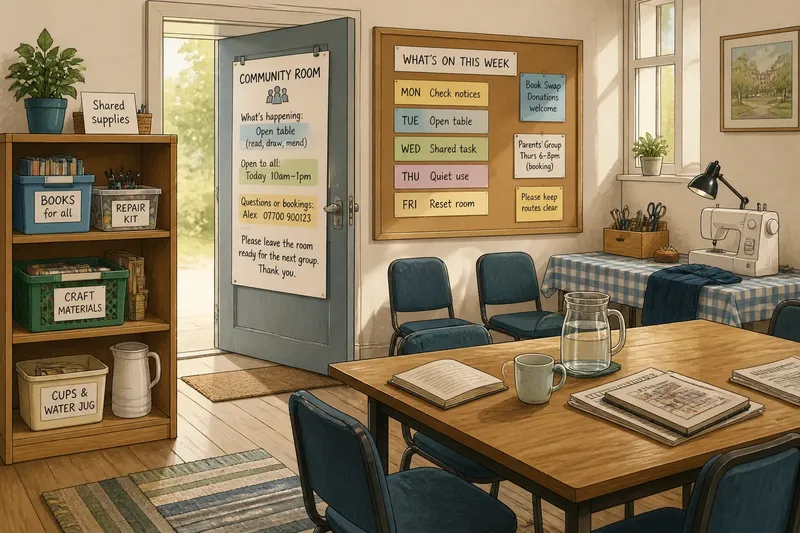
On Monday morning, a caretaker stacks folding chairs against the wall of a community room. By evening, the same floor might hold a repair table, a parents’ group or a quiet place to wait out the rain. A shared community room works best when its ordinary uses are as legible as its formal bookings.
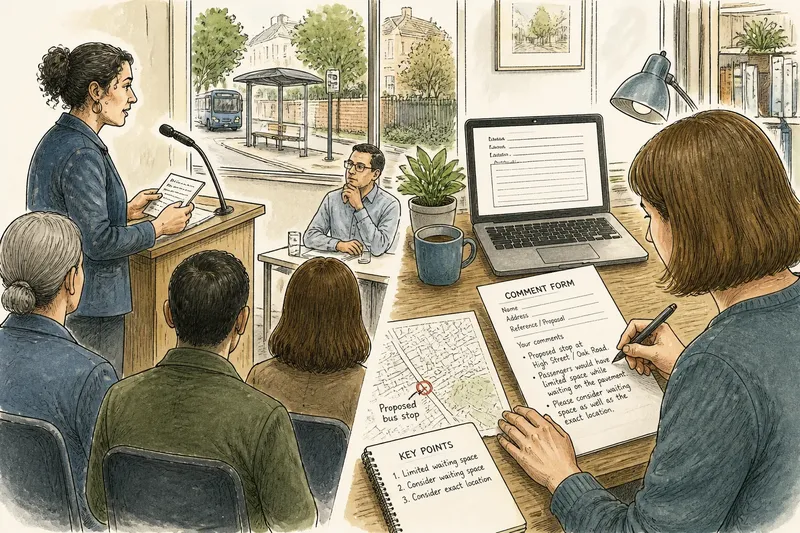
The familiar meeting layout still has a job: chairs face a speaker or a table, and people know where to look. But a room can also support mending, reading, a shared meal or a brief pause between errands. The hard part is not inventing activities. It is making changes of use clear enough that nobody needs an insider to explain the chairs.
Room for daily use
A room arranged only for meetings can look unavailable when no meeting is under way. A noticeboard, a labelled shelf and a few movable chairs offer other possibilities without turning the space into a permanent project. The aim is not to fill every hour. It is to let people understand what they may do there.
That distinction matters. A small group repairing a coat, a neighbour reading a notice and a busy evening gathering use the room differently. None needs to be treated as the room’s one proper purpose. Stable shared items and clear boundaries let those uses sit alongside one another.
Shared community room rhythm
A weekly rhythm can help users know what to expect, but it should respond to the people and rules of the particular venue. The example below is a working pattern, not a calendar to copy. Each action has a visible result and a decision to make if the result is a problem.
- Monday, check notices. Look for expired notices and confirm the booking board against the room’s current schedule. If a notice is out of date, remove it; if the schedule is uncertain, ask the responsible contact before advertising open use.
- Tuesday, set an open table. Put out a few chairs and one clear surface for reading, drawing or mending. If the route from the door to the seats is blocked, move the table or chairs; if it is clear, leave the layout in place.
- Wednesday, prepare a shared task. Set out only the tools or materials needed for the activity, such as donated books and sorting boxes. If supplies spread into an access route, stop and reduce the working area; if the route remains clear, continue there.
- Thursday, leave space for quiet use. Keep the furniture arrangement simple and identify any time when the room is reserved. If a booking conflicts with drop-in use, follow the published schedule; if no booking applies, make the open period visible on the door.
- Friday, reset the room. Return chairs and shared supplies to their labelled places and note damage or missing items for the responsible contact. If something is unsafe or unusable, mark it out of use and report it; if everything is in order, leave the room ready for the next group.
- Before each handover, check the sign. Make sure it states what is happening, when casual visitors may enter and whom to ask about access. If any detail is missing, update the sign or contact the organiser; if the information is clear, leave it posted.
The useful part is the handover between activities. People should not have to guess whether the room is open, whether cups are communal or where chairs belong. Like a shared kitchen drawer, it works better when common things have an obvious home.
When plans change
A booking can be cancelled, attendance can grow, or a supply can run out. The room needs a response to these ordinary surprises, not a rule for every possibility.
If a booking falls through, make the status visible. Put a sign on the door or update the public noticeboard to say whether walk-in use is welcome and during what period. If no authorised person is available to open the room, do not imply that it is open; ask the responsible contact to clarify the arrangement.
If more people arrive than expected, keep entrances and routes clear. Tell the group what the room can accommodate under its building rules, and move or postpone an activity if the space cannot remain usable. For limits involving safety or access, follow the venue’s instructions rather than improvising.
If a shared supply runs out, separate what the activity depends on from what would merely be convenient. Tell participants about a missing essential before they arrive and offer another use if possible. Replacing communal supplies should not quietly become one person’s private obligation.
Signals of welcome
Flexibility does not mean leaving everything in a state of permanent rearrangement. People need to see where they can sit, put their belongings and ask practical questions. A clear entrance, movable chairs, a labelled shelf and a named contact provide useful cues.
Say you manage a library friends’ group that meets around a long table. A parent arrives early with a child to wait before an appointment. You check that the room is not booked for another use, move two chairs towards the wall, keep the group’s papers on the table and point out the water jug. The observable result is that the visitor can wait without interrupting the meeting. If another booking is due, you instead explain the room’s availability and direct them to the posted contact or another appropriate waiting place.
The room can offer that choice because some space remains unclaimed. If every surface is covered and every cupboard treated as private, an unplanned use becomes difficult. If nothing has a clear owner, people may not know what they can touch. A practical middle ground is shared supplies with labels, alongside storage reserved for specific groups.
Words on the door matter too. “Members only” may accurately describe an activity, but it should not stand in for the room’s general access arrangements. State what is happening, when casual visitors are welcome and how to ask about future use. Plain language is kinder than making a closed door into a social puzzle.
Questions about room sharing?
What makes a community room flexible?
Furniture and storage should support more than one use, while signs explain what is shared and what is reserved. A few dependable arrangements are usually easier to understand than constant rearrangement.
How can visitors tell if the room is open?
Post the open periods and any conditions for entry on the door or a public noticeboard. Include a contact for questions, so an unattended room is not mistaken for an invitation.
How should shared supplies be organised?
Label common items and keep them in a known place; mark group-owned materials separately. If an essential item is missing, tell participants and change the activity or plan before they arrive.
When should the routine change?
Review it when users repeatedly meet the same obstacle or when a new use conflicts with the existing arrangement. Change the smallest practical part first, then make the new expectation visible.
Keep use legible
A shared community room depends less on an elaborate timetable than on what users can understand at a glance. A current schedule, clear labels and a reliable reset make it easier for different groups to use the same space without treating it as their private territory.
Begin with a change the venue can maintain, such as a labelled shelf or a clearer note about drop-in hours. Then check whether someone unfamiliar with the room can tell what is available, what is reserved and whom to ask. That simple test makes the room’s public purpose visible, even on a quiet afternoon.